Why a SaaS company needs weight early
Every company is measured against the biggest name in its category, long before it is big. In software that comparison is immediate, because the leader’s website is one tab away.
Three audiences make it. Investors read each pitch against the category leader’s brand, whether the founder intends it or not. Enterprise buyers decide whether a company is safe to trust before the first call is booked. And the best people join the company that already looks like it will win.
The best branding has been kept for companies that are already big. We build it for the ones on the way up. A SaaS brand identity with weight does not wait for scale. It is one of the causes of it.
What makes SaaS branding difficult
Software is hard to see. A platform’s value sits in what it connects, automates or reveals, and none of that has a shape until an identity gives it one. So many SaaS brands fall back on the same picture: a dashboard, a gradient and a friendly sans-serif.
Our SaaS work starts by refusing that picture. For Strata, an enterprise SaaS platform, the task was to express integration with clarity rather than complexity. For Xoto, a data intelligence platform, it was to treat data as something that moves, not something to stare at. In both cases the answer came from one idea, and the idea came before any drawing.
How we build a SaaS brand identity
Four disciplines, one senior team, one idea carried from strategy to launch.
- Brand strategy. We find the one idea at the centre and the position that gives the company weight in its category: research and audit, positioning, brand platform, brand architecture.
- Verbal identity. A name and a voice that sound as assured as the company intends to be: naming, messaging, tone of voice, taglines.
- Visual identity. A mark, typography and colour that are constructed, not styled, and defensible line by line.
- Brand systems. Guidelines, motion identity, web and digital, and launch assets, so the identity holds across every market and touchpoint.
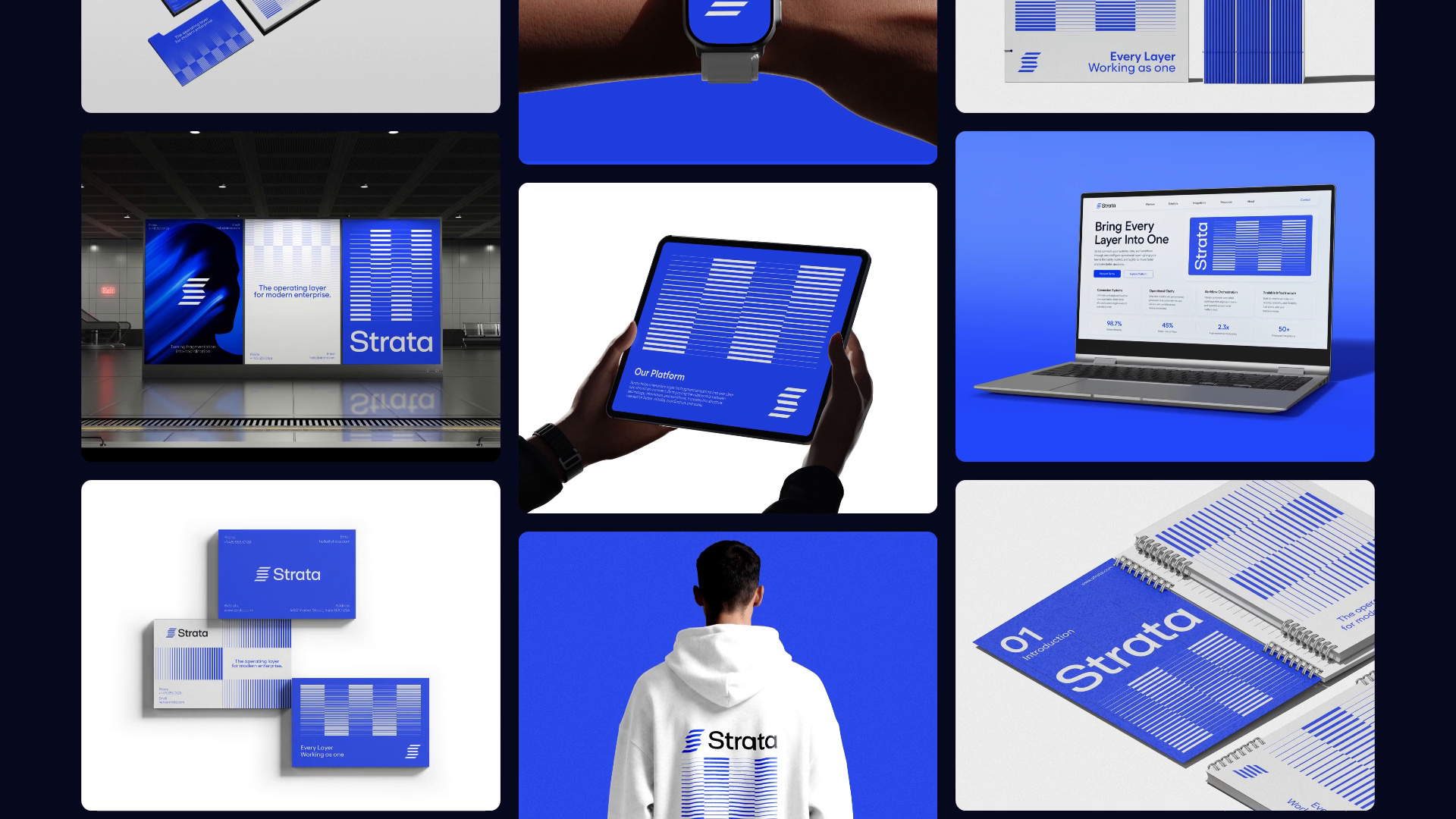
For a software company the system matters most. The brand has to work inside the product interface, on the website, in a sales presentation and in a campaign, and still be one brand. Strata’s identity was built on modular grids for that reason. Xoto’s was designed to extend across product interfaces, dashboards, reports and motion.
All four disciplines are described under branding services, with brand strategy, logo design and visual identity each covered in depth.
SaaS identities we have built
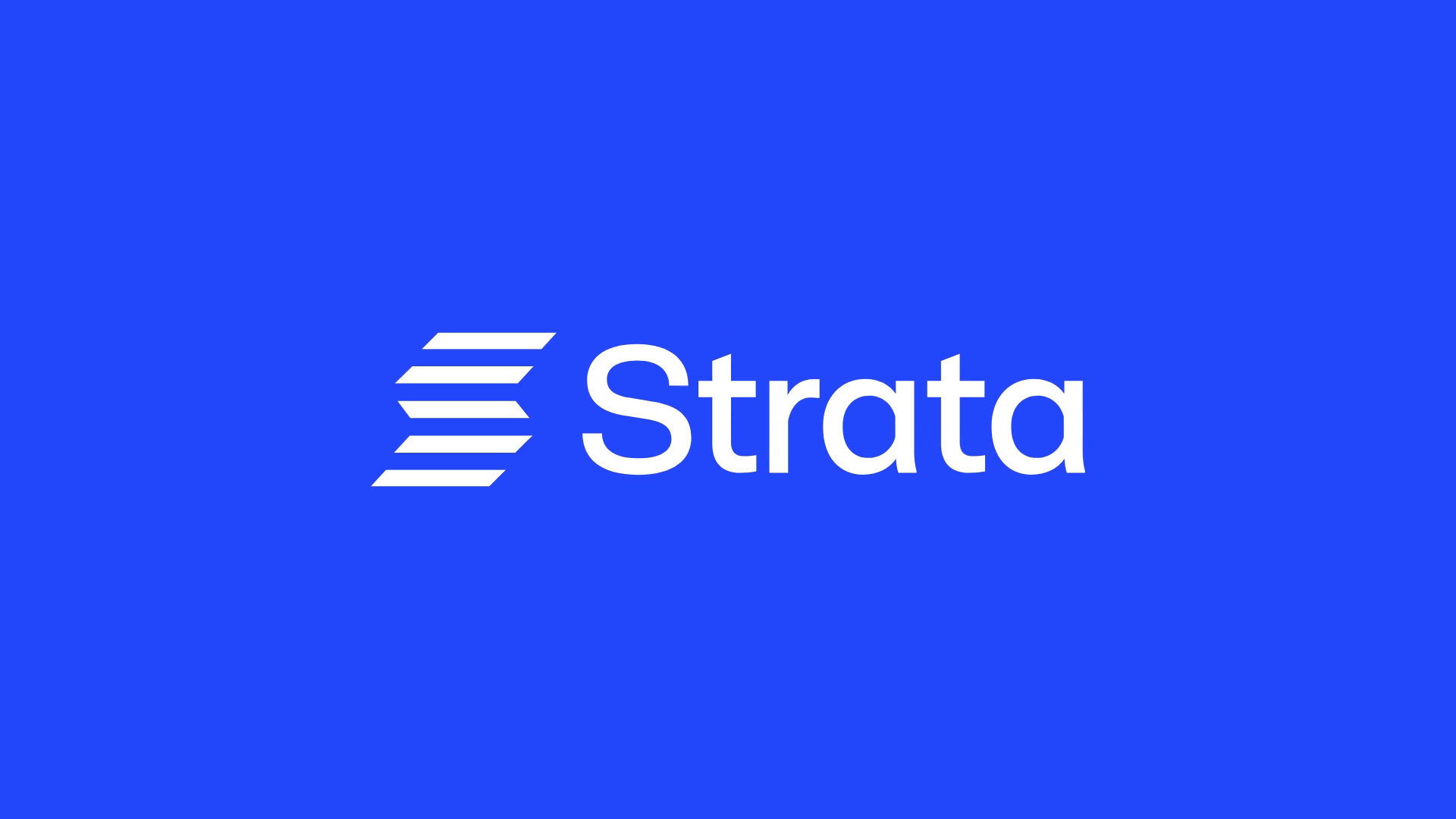
Strata connects fragmented systems, data, workflows and teams in one coordinated environment. Its idea is every layer, working as one: five horizontal layers that share one structure and one direction, and together form a quiet letter S.
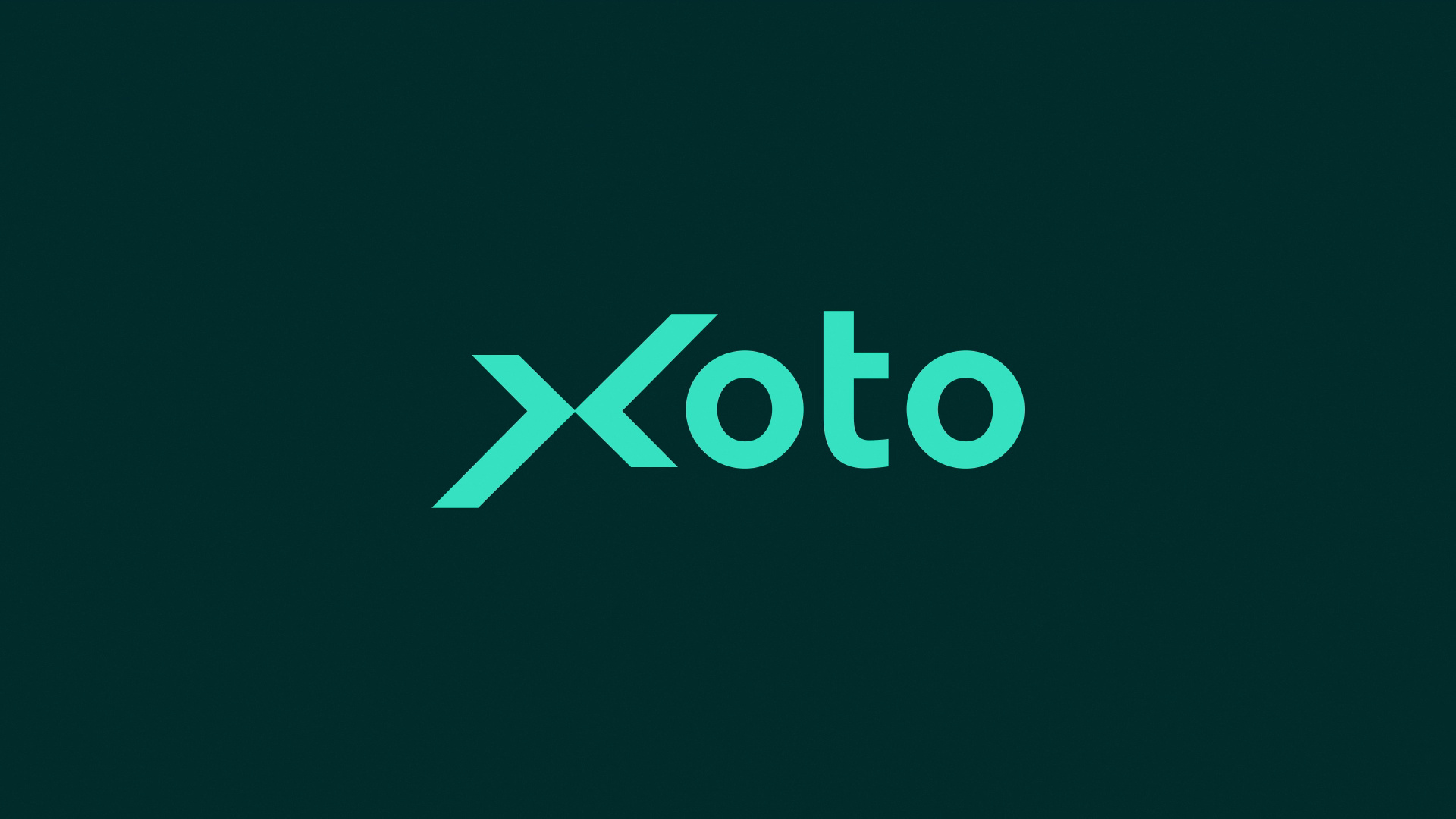
Xoto turns business information into direction. Its idea is intelligence in motion, built on a single 45° angle, with colour that works as information.
Related platform work includes OnexAI, an AI agent deployment platform, described under brand identity for AI companies.
Scope, time and price
Core, a logo identity, starts from $1,500. Foundation starts from $2,500 and runs two to three weeks. Gravity starts from $5,000, runs three to four weeks, and adds full strategy, messaging and a complete visual system. Orbit, our ongoing partnership, starts from $3,500 a month with a three-month minimum.
Every project gets a defined scope and price before work begins, and you receive dates for every stage. At the end you own the identity outright: full ownership and copyright transfer on final payment. The packages are set out under pricing. To begin, tell us where the company is heading.